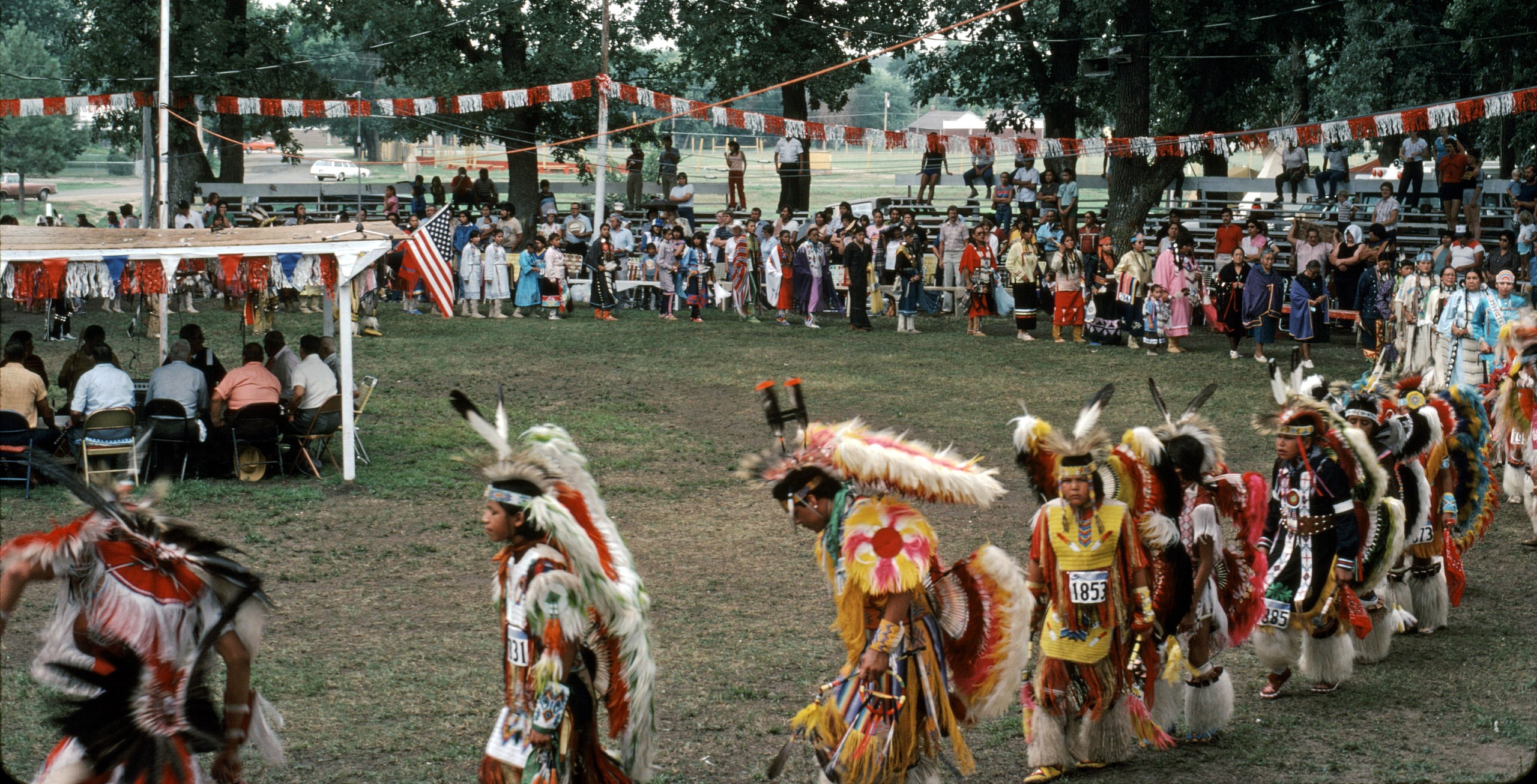

This work was done for my ENG-1BH class (Critical Thinking and Writing / AP english). The prompt was to make a formalist criticism of Tommy Orange’s There There.
Opal Viola Victoria Bear Shield once said in the novel There There, “One of the last things Mom said to me when we were over there [Alcatraz island], she said we shouldn’t ever not tell our stories” (Orange 60). Tommy Orange wrote the novel There There to help tell the untold tales of the Urban Indian; and just as he said in an interview, “There’s so many Native people living in cities and very little written about that experience. So, it came from wanting to make sense of an experience that I knew was real” (Orange, “Urbanity” 1). Tommy Orange himself grew up Indian in an “urban” environment, Oakland, California, where the megaplot of his novel There There takes place. There There is a story of the lives of more than 10 different Urban Indians, all interluding in the great Oakland powwow, where the story ends with a shooting, ruining their lives. More than just a story, it is also a recount of Orange’s personal experiences & observations.
As an author, perspective is key in portraying events as you want the reader to view them. Each chapter in the novel dedicated to a specific character, the first chapter about the character Thomas Frank in There There uses the second person (pronouns “you”), a rare writing style used in fiction or in general. Thomas Frank is by no means a major character, he is a blend of all the other characters. Frank is a drummer, drunk, & facing issues of identity & upbringing like the numerous other characters, such as Dene and Edwin. Through the use of the second-person perspective in Thomas Frank’s chapter, Orange’s novel There There masterfully conveys Frank’s struggles with family, cultural identity, and religious identity, ultimately revealing how these complexities are inextricably linked to the theme of storytelling, and highlighting the need for non-Native Americans to listen to and understand the multifaceted narratives of Native American experiences.
First, Orange effectively uses the second-person perspective to help the reader understand Frank’s troubled familial upbringing. Orange says, “But inside every kind of sound lurked a sadness. In the quiet between your parents, after a fight, they both managed to lose. You and your sisters listening through the walls for tones, listening for early signs of a fight. For late signs of a fight reign” (p 210). The narrator puts us in Thomas Frank’s shoes (by making the protagonist and reader the same through second perspective) to show how, when he was young, he often was apprehensive about his parents fighting; how the familial situation was tense, and how the parents fought and were left both “losing” in the end. Familial disputes in the household also ended up dividing Thomas Frank’s whole family due to religion. Orange said, “She [Thomas Frank’s mother] who fell to her knees, she who fell in love with your dad in Indian ceremonies she ended up calling demonic” (223). In the beginning, Thomas Frank’s mother, who was white, married Frank’s Indian dad as a member of the Native American Church, which is a monotheistic religion that involves Indigenous ritual & the use of psychedelic drugs (like peyote). The Native American Church also believes in a holy trinity akin to that of Christianity, but in most denominations does not use the bible as a spiritual text. Later in the chapter, Frank’s mother becomes a member of the Pentecostal Christian church, a church that often involves very “spiritual” practices like tongue speaking considered obscene by outsiders. After her conversion to Pentecostal, Frank’s mother ended up calling his dad’s Indian ceremonies, including psychoactive peyote, demonic. It can be assumed that this is a factor in what led to their eventual divorce. After Frank’s sister DeLonna overdosed PCP (angel dust):
And then there was her [DeLonna’s] voice, that low deep guttural sound. She yelled at your dad and he yelled back and she told him to shut up and he did shut up because of that voice. She told him that he didn’t even know which God he was worshipping, and soon after that DeLonna was on the floor of your sister Christine’s room, foaming at the mouth. Your mom called an emergency prayer circle and they prayed over her and she foamed and writhed and eventually stopped . . . When she woke up they gave her a glass of milk, and when she was back with her normal voice, and eyes, she didn’t remember any of it. (223)
DeLonna had her “demonic” voice when she was high, low & guttural. She lashed out at her father for his Indian heresy, then foamed at the mouth, causing Frank’s mother to do a prayer circle exorcism. This event is what Thomas Frank remembers as the breaking point in his relationship with his family. Late in the chapter, Frank feels melancholy for how his family ended up in a flashback:
You see that old brick church you always notice because of how run-down and abandoned it looks. You feel a rush of sadness your mom and her failed Christianity, for your failed family. How everyone lives in different states now. How you never see them. How you spend so much time alone. You want to cry and feel you might but know you can’t, that you shouldn’t. Crying ruins you. (222)
The reader feels Frank’s grief at his family: how all of his relatives are separated, how Frank does not see them anymore, and how he ended up alone. Based on these examples, the use of the second-person “you” in these quotes places the reader in Thomas’s familial situation and helps the reader understand the chaos in his family.
Secondly, the use of the second-person in Frank’s chapter in There There also helps us feel Frank’s complicated religious identity. Orange states, “Your mom speaking in tongues on the crest of that weekly Sunday wave, sadness because you couldn’t feel any of it in there and wanted to, felt you needed it, that it could protect you from the dreams you had almost every night about the end of the world and the possibility of hell forever” (210). Thomas Frank witnesseds his mother speaking in tongues at the Sunday service while feeling no faith in observing the act, even though he wanted to save himself from the horrors of hell. Orange also shows Frank’s belief that religion prevented him from discovering his cultural identity, “The train moves and you think of your dad and how he took you to that powwow after the divorce, how he had never taken you before when you were younger, and you didn’t go to powwows and do more Indian things” (222). Frank’s mom was against Indian rituals & practices, making Frank believe the reason why he never went to powwows before his parents got divorced was his mother’s religion. Since Frank likes Indian rituals, especially drumming at the powwow, it can be assumed that he may have some contempt towards the Christian religion. Once Thomas Frank arrives to play the drum with Bobby Big Medicine in the powwow, Orange says “You pray a prayer in your head to no one in particular about nothing in particular. You clear a way for a prayer by thinking nothing” (225). Thomas Frank loves drumming, and after he gets fired from the powwow committee, all he wants to do is drum. Praying at the start of his drumming to the end, he prays to no one about nothing. It can be assumed that Thomas Frank became nonreligious, but not necessarily an atheist, because of the spiritual practice of praying. For the reader to understand a character’s religious identity, the reader must view their inner thoughts (as spiritual/religious practices like prayer lie in the mind). This is only possible in a 3rd person omniscient, first-person, or, more effectively, the second person. Using the second person effectively conveys to the reader Frank’s religious identity.
By placing the reader as the subject of the second-person in Thomas Frank’s first chapter, readers can better understand the Native impostor syndrome that Thomas Frank experiences. Thomas Frank is half-Indian, half-white. Frank’s mother is white, while his dad is Indian. As a reminder, Frank’s mother is white, and a “spiritual” evangelist; she often performs in the more spiritual practices of the church, such as tongue-speaking & exorcism. As a Native American church follower, Frank’s Father is full Indigenous, and does peyote (an indigenous psychedelic), and goes to powwows. Only after Frank’s parents’ divorce was Frank’s father able to take care of Frank, bringing Frank to the powwow for the first time. Comparing other half-Indians in the novel, the first to come to mind are probably Edwin Black, & most notably Dene Oxendene. When applying for the grant for his videotaping project, Dene Oxendene was very conscious of his non-Indian appearance, worried it might ruin his chances of getting the money. Humorously, the character Edwin Black is more worried about his weight than his racial identity. In Blue’s chapter, “And he [Edwin Black] makes too many comments about himself, his weight. It makes people as uncomfortable as he appears to be most of the time” (238). Going back to Thomas Frank, the reader can see some of his own half-Indian struggle:
The tape-staticky gourd-rattle and kettle-drum boom [of Frank’s father’s peyote tape]. He liked to play it loud. You couldn’t stand how noticeable the sound was. How noticeably Indian your dad was. […] As for your mom’s side, as for your whiteness, there’s too much and not enough there to know what to do with. You’re from a people who took and took and took and took. And from a people taken. You were both and neither. When you took baths, you’d stare at your brown arms against your white legs in the water and wonder what they were doing together on the same body, in the same bathtub (216).
Thomas Frank is unsettled by his dad’s peyote tapes, how very “Indian” they sounded, and how “Indian” his dad was. He also finds his whiteness invalidating his “Indianness”, and conversely, his “Indianness” invalidating his whiteness. As Orange said, “You [Thomas Frank] were both and neither”. Frank also finds his mixed-race status perplexing, as he sees his brown arms & white legs in the same body while taking baths. Using the second person helps us understand Thomas Frank’s complex racial identity as a half-Indian, as seen in this quote.
Ultimately, the overall reason why the second-person is used in Thomas Frank’s chapter is because Orange wants the non-Indian to understand the Indian struggle. Alberto Castelli, Associate Professor of Literature at Hainan University wrote “The Melancholy of the Second-Person Narrator” to argue that the second-person, although riskiest, is best for writing characters the reader may otherwise not sympathize with. Dr. Castelli says, “By forcing the reader to identify with the fictional protagonist, the second-person point of view draws the reader dramatically into the text while simultaneously ejecting the ‘I’” (2). Dr. Castelli suggests that the second point of view ejects the self-presence of the reader and the “I” of the reader, while implanting the situationship of the fictional protagonist, in this case, Thomas Frank, into the reader. This can also help Orange impose a perspective of the Urban Indian on readers with a typically non-Indian background. Castelli also said, “By obliterating the distance between the narratee-audience and the narratee-protagonist, the second-person creates an alternative space of complicity, of secrecy which invites sympathy for the fictional ‘other’” (4). Castelli suggests sympathy is the other goal of the second person. By removing the 3 individuals, narrator, protagonist, & reader, the second-person narrative unifies both the protagonist and reader, endorsing a shared sympathy and complicity.
To help the reader sympathize and understand Frank’s upbringing, it was important for Orange to use the second-person narrator for his first chapter. The second person accentuated Frank’s familial upbringing, religious identity, and racial identification. Castelli also argues that the second-person is critical in removing the reader’s identity to understand the protagonist’s foreign character, in this case, the reader’s non-Indianness to bear Frank’s Indianness. Orange mocks the reader’s individuality in second-person “Your face in the mirror, reflected back at you, most people don’t even know what it looks like anymore. That thing on the front of your head, you’ll never see it, like you’ll never see your own eyeball with your own eyeball, like you’ll never smell what you smell like, but me, I know what my face looks like. I know what it means” (16).
Works Cited
Bankhead, Henry. “There There.” Library Journal, vol. 143, no. 6, Apr. 2018, pp. 63–69. EBSCOhost, research.ebsco.com/linkprocessor/plink?id=9db699af-c4e0-3fda-a956-ad061381f636.
Castelli, Alberto. “The Melancholy of the Second-Person Narrator.” Confluencia: Revista Hispánica de Cultura y Literatura, vol. 38, no. 2, Apr. 2023, pp. 41–59. EBSCOhost, https://doi-org.norcocollege.idm.oclc.org/10.1353/cnf.2023.a897573.
Greenblatt, Leah. “There There.” Entertainment Weekly, no. 1518, June 2018, p. 60. EBSCOhost, research.ebsco.com/linkprocessor/plink?id=a246ef9e-47a4-370b-aec5-5f217a88be24.
Hong, Terry. “There There.” Library Journal, vol. 143, no. 13, Aug. 2018, pp. 51–52. EBSCOhost, research.ebsco.com/linkprocessor/plink?id=1cd91224-4e83-3693-ab6c-d3dea4a81757.
Orange, Tommy. “Urbanity from the Prologue of There, There.” World Literature Today, vol. 93, no. 4, Oct. 2019, p. 57. EBSCOhost, research.ebsco.com/linkprocessor/plink?id=b71d598d-3aba-393e-b50d-1b6e4bd8533a.
Orange, Tommy. There There. New York, Alfred A. Knopf, 28 May 2018.
Smith, Terria. “There There.” News from Native California, vol. 32, no. 2, Dec. 2018, p. 37. EBSCOhost, research.ebsco.com/linkprocessor/plink?id=2871067d-302b-3c5f-bd0e-7d918e59379f.